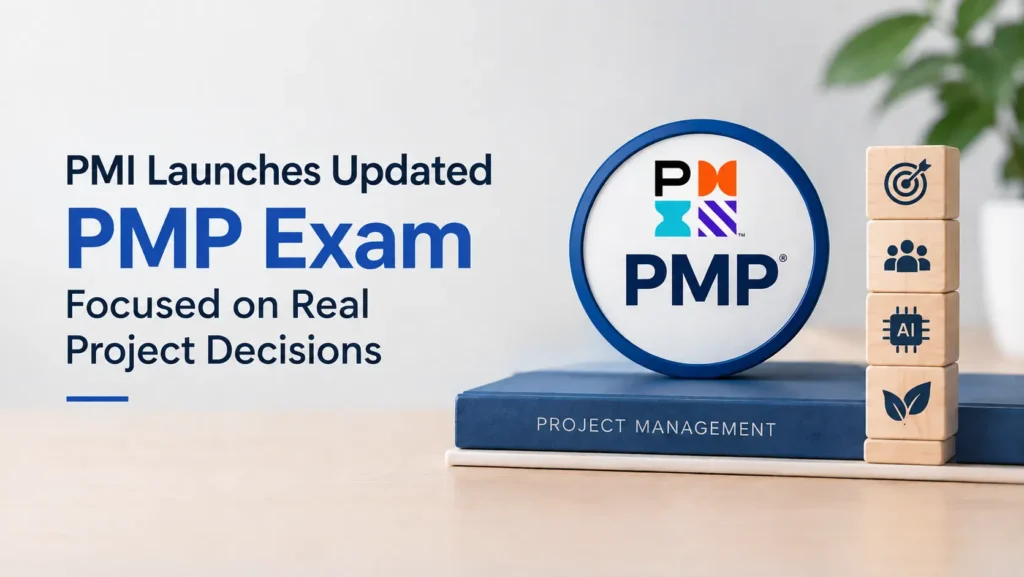
PMI Launches Updated PMP Exam Focused on Real Project Decisions
Key takeaways
- The Project Management Institute (PMI) has released a refreshed Project Management Professional (PMP) exam worldwide.
- The new version puts more weight on business alignment, leadership and working with AI.
- Candidates answer situational questions where they have to decide what to do, so memorised theory won’t carry them.
- PMI expects demand for up to 30 million more project professionals by 2035.
What happened
PMI has rolled out a revised PMP certification exam across the world, at a time when AI is taking over routine tasks and changing how teams work. The news was reported by The Guardian Nigeria on 19 September 2026.
George Asamani, PMI’s managing director for Africa south of the Sahara, said the exam is reviewed regularly so it keeps matching how project professionals work, the problems they face and what organisations expect from them. The new version is the latest step in that process.
The test now gives more space to aligning projects with business goals, strategic decisions, stakeholder engagement, leadership, sustainability and delivery in workplaces that use AI. Candidates must show how they would apply judgment in realistic situations, such as balancing competing priorities and keeping stakeholders aligned while the project stays tied to the value it is meant to deliver.
Why it matters
PMI warns that some technical skills could lose their relevance within five years. Knowing tools and schedules is no longer enough for project professionals.
PMI’s own research backs this up. According to the figures, 35% of CEOs see the gap between planning and execution as their biggest barrier to reinvention, and 34% say the failure to upgrade talent holds them back. Asamani said organisations need people who understand what the business is trying to achieve and can turn those priorities into projects that succeed.
The hiring pressure is large. PMI estimates that organisations worldwide will need up to 30 million additional project professionals by 2035 to deliver transformation, infrastructure and technology programmes. Africa’s need is sharper. Asamani pointed out that the continent is expected to supply 85% of global growth in the working age population by 2050, and said the opportunity lies in giving that workforce the skills to put AI to work. In his view, the PMP certification exists to confirm those skills and prepare people to deliver projects that shape the continent’s future.
What a recent candidate says
Francis Olanrewaju Boluwaji, founder and managing director of Hope For Hopeless People Foundation, recently earned his PMP and called the new exam highly practical. He said memorised answers wouldn’t get anyone through. You had to think each scenario over and decide on a course of action. The questions, he added, centred on stakeholder engagement, leadership and adapting to change.
What this means if you’re preparing for the PMP
Spend more study time on scenario questions and less on definitions. Before booking a sitting, check PMI’s official exam materials for the current content outline, since the emphasis has shifted toward business alignment, leadership and AI in project delivery.
