
How Excessive Email Notifications Hurt Productivity
Excessive email notifications hurt productivity because each one triggers a forced context switch. Getting back to full focus takes far longer than the interruption itself. UC Irvine research puts the average recovery time above 23 minutes, so a few pings an hour can wipe out most of a focused work session.
If you are learning how to manage emails at work, start here: email should not get to break your focus unless it truly has to.
Here is what that looks like in practice. You are mid-sentence on a proposal, and your screen lights up. New message. You glance before you can stop yourself. Ten seconds pass. Then you are back to the proposal, except you are not really back. You are rereading the last paragraph and trying to remember what you were about to say.
That ten-second glance costs far more than ten seconds. Here is what the research says, and what actually helps.
What One Alert Costs
Not all interruptions are equal, but notifications are close to the worst kind. They arrive without warning, and they force a choice: open it or ignore it. That choice alone pulls attention away, even if you never click.
Gloria Mark’s team at UC Irvine has studied workplace interruptions for years. Their steady finding: it takes about 23 minutes and 15 seconds to return to the original task after a distraction. People often drift to another task before they get back to the first one.
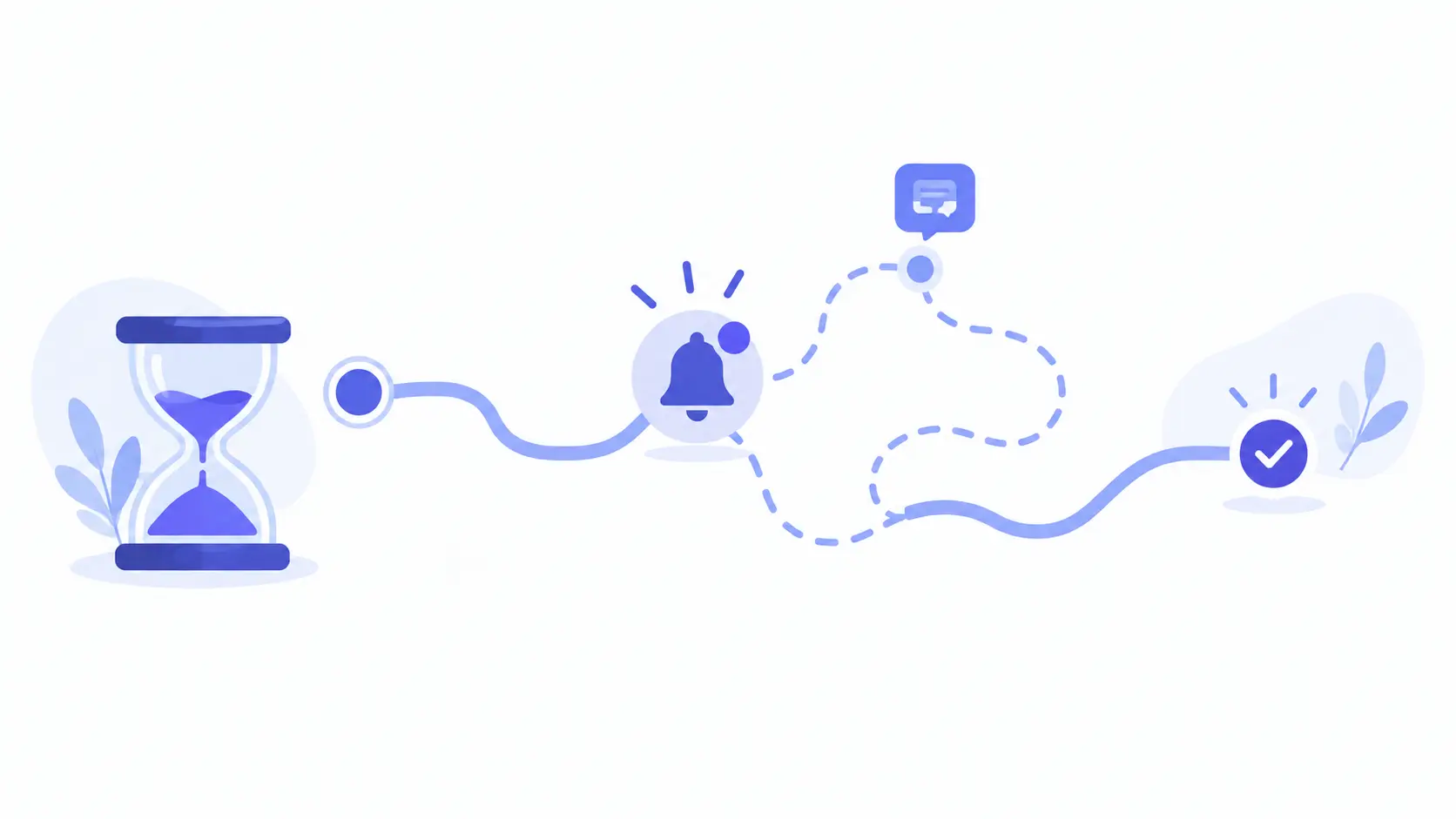
A separate study in the Journal of Experimental Psychology found that even a few seconds of interruption were enough to double the error rate on the task people were doing. The break does not need to be long to be costly. It just needs to happen.
Multiply that by the number of alerts that land in a normal workday, and the cost grows fast.
Why Alerts Are Worse Than Email Itself
Email overload and alert overload are linked, but they are not the same thing. You can have 400 unread messages sitting quietly in your inbox and lose no focus to them, because they are not breaking into your day.
The real damage comes from real-time alerts that ask for attention the second they arrive.
Batch checking helps. So does turning off notifications. These email management strategies support workplace productivity without making you ignore mail all day.
Five Ways Constant Pings Drain Your Day
| 1 | Broken focus. Every alert is a small tax on whatever you were doing, whether or not you open the message. |
| 2 | More mistakes. Short interruptions raise error rates on the task you were midway through, even after you pick it back up. |
| 3 | Fewer long work blocks. Sustained concentration needs a clear runway. A ping every few minutes makes that runway hard to build. |
| 4 | Reactive instead of planned work. When alerts set the pace, your task list stops being yours. You end up working in the order things arrive, not the order they matter. This is exactly why keeping task priority and deadlines inside a dedicated workspace matters; it lets your actual task list, not your inbox, decide what you work on next. |
| 5 | Stress with no upside. Researchers at UC Irvine and the US Army found that workers with constant email access switched between windows about twice as often as workers without it, and they reported higher stress. The access did not make them faster. It made them more scattered. |
What the Research Shows
McKinsey found that knowledge workers spend close to 28 percent of their workweek on email, and a good share of that time goes to messages they did not need to see in the first place. Front, a workplace communication company, ran an internal test where its CEO, Mathilde Collin, turned off all notifications and asked the rest of the team to try it too. Only about a third of the hundred-person team stayed with it. That says less about the idea and more about how hard the habit is to break once it shapes how people work.
None of this makes email the enemy. It means the interrupt mechanism, the buzz and banner that pull your eyes off the screen, is doing more damage than the messages themselves.
Won’t I Miss Something Urgent?
Rarely. And when it happens, it is usually not because notifications were off. Truly urgent things, like a system outage or a client emergency, tend to come through a phone call or a text, not as a calm note sitting in an inbox.
If your team uses email as the emergency channel, that is a communication gap worth fixing on its own. It is not a reason to keep every alert switched on.
How Often Should You Actually Check Email?
Three or four times a day covers almost every role. Customer-facing jobs with tight response rules may need five or six checks a day, but even then, batching beats reacting to every ping as it lands.
How to Fix It Without Missing Anything Important
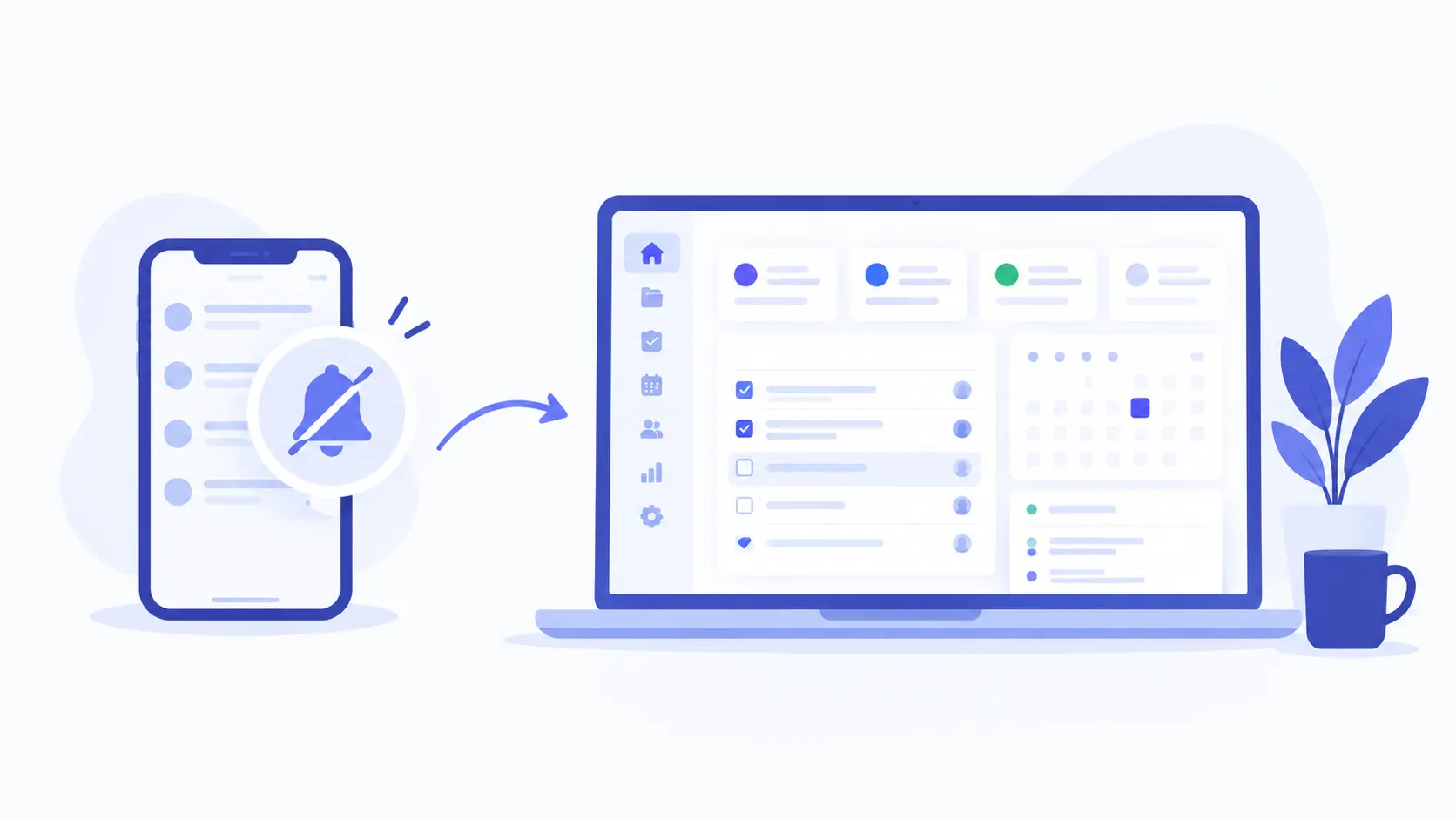
| ✓ | Turn off push notifications for email. Leave them on for calls or texts if that is your real emergency channel. Email can wait the length of a coffee break. |
| ✓ | Set fixed times to check it. First thing in the morning, after lunch, mid-afternoon, and before you log off covers most jobs. Anything urgent enough to need an instant reply usually comes through a phone call anyway. |
| ✓ | Move status updates out of your inbox. A lot of what shows up as urgent email is really a project update, a file request, or a quick question about where something stands. When that kind of back-and-forth lives in a shared workspace instead, where the whole team can see progress without pinging each other, it stops competing with your inbox for attention. It is one reason agencies and consultants running client work through a tool like Techxaro One keep less of it in email to begin with. Task status, files, comments, and approvals stay attached to the project instead of scattered across threads. |
| ✓ | Protect at least one uninterrupted block a day. Even 90 minutes with notifications off, your calendar blocked, and your phone in another room gets you farther than a full day of half focus. |
| ✓ | Tell people what to expect. A short line in your email signature or chat status, like “I check email at 10, 1, and 4,” sets clear expectations so people stop assuming silence means you missed something. |
These email management strategies help workplace productivity. They do not require reading fewer emails. They require choosing when email can interrupt you, instead of letting every message make that choice for you.
