
Why Project Management Becomes Chaotic as Teams Grow (And How to Fix It)
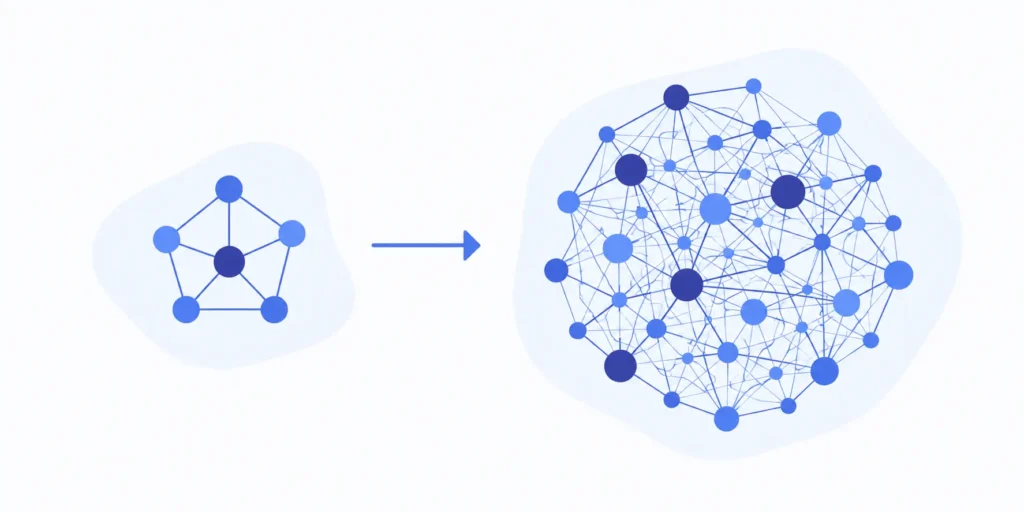
Project management becomes chaotic as teams grow because the number of communication paths, decisions, and dependencies between people increases far faster than the team’s headcount does. A team of five has roughly ten possible communication channels between its members. Double that team to ten people, and the number of channels doesn’t double; it roughly quadruples. Nothing about the work itself changed. What broke down is coordination, and coordination complexity grows exponentially, not linearly, as a team scales. That mismatch, more people generating far more connections than anyone accounted for, is the root cause behind nearly every project management challenge that shows up as a team grows.
I’ve watched this happen the same way more than once. A team of six ran smoothly for months; everyone knew what everyone else was doing without much formal process at all. Then the team doubled within a quarter: new hires, a second project running in parallel, a client added mid-stream. Nothing about the individual people changed; they were still capable, still working hard, but suddenly deadlines slipped, the same question got asked in three different channels, and nobody could say with confidence who owned what anymore. The chaos wasn’t a failure of the people. It was a failure of the structure to keep pace with how much more coordination the bigger team actually needed.
Why Growth Multiplies Complexity Instead of Just Adding to It
The mechanism behind this is well documented, and it’s worth understanding the actual math, because it explains why “just work harder” or “communicate more” never fixes it. Research on team scaling has found that communication channels increase by nearly 300% when a team moves from 10 to 20 people, a doubling in headcount that nearly quadruples the coordination burden. (Medium, citing Harvard Business Review’s Team Scaling Report) This isn’t a fluke of one particular team. It’s the same pattern behind the classic project management formula for communication channels, n(n-1)/2, where n is the number of people. A team of 5 has 10 possible channels. A team of 10 has 45. A team of 20 has 190.
The Biggest Project Management Challenges as Teams Scale
This underlying complexity shows up as a specific, recognizable set of challenges, the ones project managers run into over and over as headcount grows. Here’s how I’d break down the most common issues in project management at this stage.
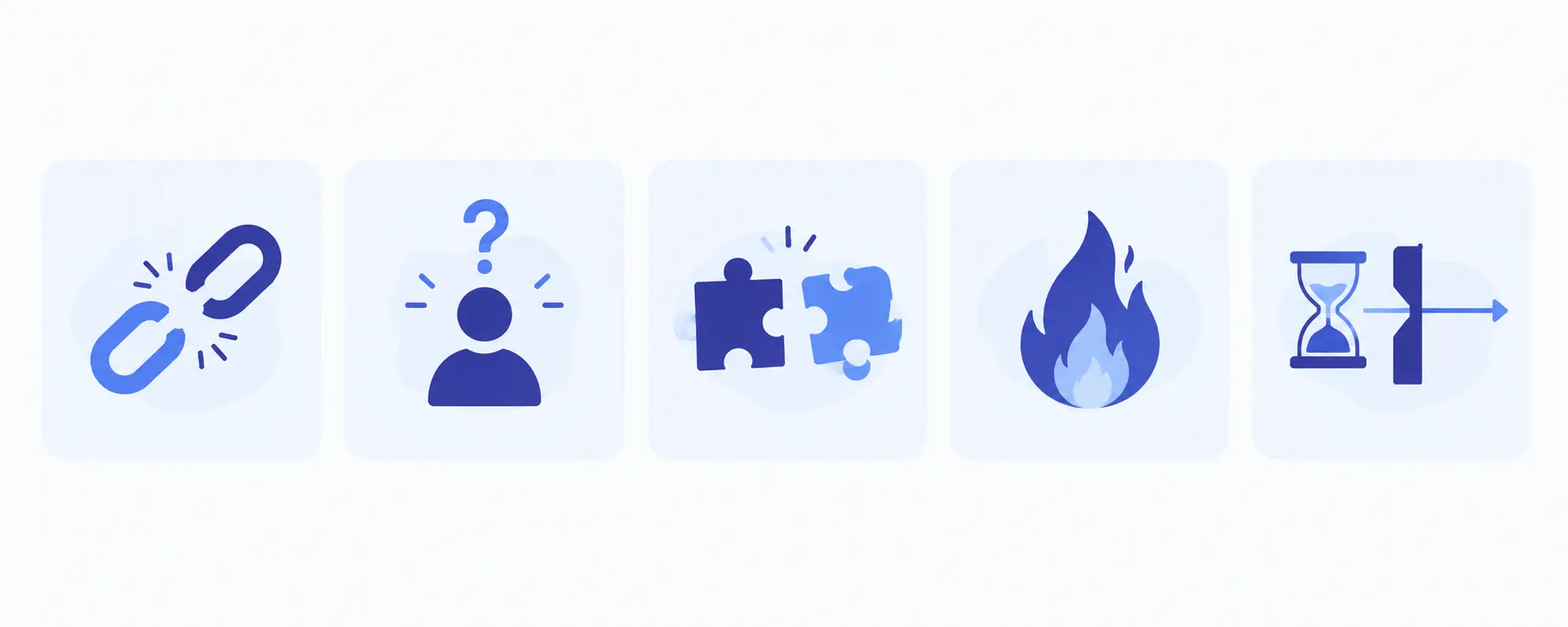
| 1 | Loss of tribal knowledge. In a small team, context lives in people’s heads and gets shared informally, in the hallway, over lunch, in a quick Slack DM. As teams grow, that informal transfer stops scaling. Research on this found that 41% of fast-growing teams cited loss of tribal knowledge as the primary cause of operational errors during growth phases. (Medium, citing Atlassian’s Work Management Report) New hires simply never receive the context that used to travel by osmosis. |
| 2 | Accountability dilution. In a small team, ownership is obvious; there are only a few people, so it’s clear who’s doing what. As the team expands, it becomes genuinely unclear who makes which decisions and who’s actually accountable for a given outcome, especially once a task passes through several hands before it’s finished. |
| 3 | Standardized processes breaking down. What worked informally at ten people usually can’t survive at thirty. Different sub-groups start developing their own ways of working, their own templates, their own definitions of “done,” and what started as reasonable flexibility quietly turns into inconsistency that makes it hard to track progress across the organization. (Alchemy Impact) |
| 4 | Reactive firefighting instead of planning. Growing organizations often find themselves jumping from one urgent issue to the next without ever stepping back to spot the pattern behind them. Teams get very good at firefighting and lose the muscle for preventing fires in the first place. |
| 5 | Bottlenecked decision-making. In many growing teams, one or two people, often the founder or an early lead, remain the decision point for far more than they should be. Deals stall, timelines stretch, and delivery depends on someone’s calendar availability rather than a clear process. (Hashbyt) |
Here’s a quick-reference table connecting each challenge to its actual root cause, which matters because the fix for each one is different:
Challenge Management Strategies: How to Overcome These Issues
Knowing the pattern is only useful if it changes what you actually do. Here’s what I’ve found genuinely works to overcome these challenges rather than just naming them.
| 1 | Document processes before they need to scale, not after. Waiting until a team has already doubled to write down how things work means documenting chaos instead of preventing it. The right time to formalize a process is while it’s still simple enough to describe clearly. |
| 2 | Assign explicit ownership, not assumed ownership. Every recurring responsibility needs one named owner, even if several people could technically handle it. Assumed ownership is what silently becomes nobody’s job the moment a team gets too big for informal awareness to cover it. |
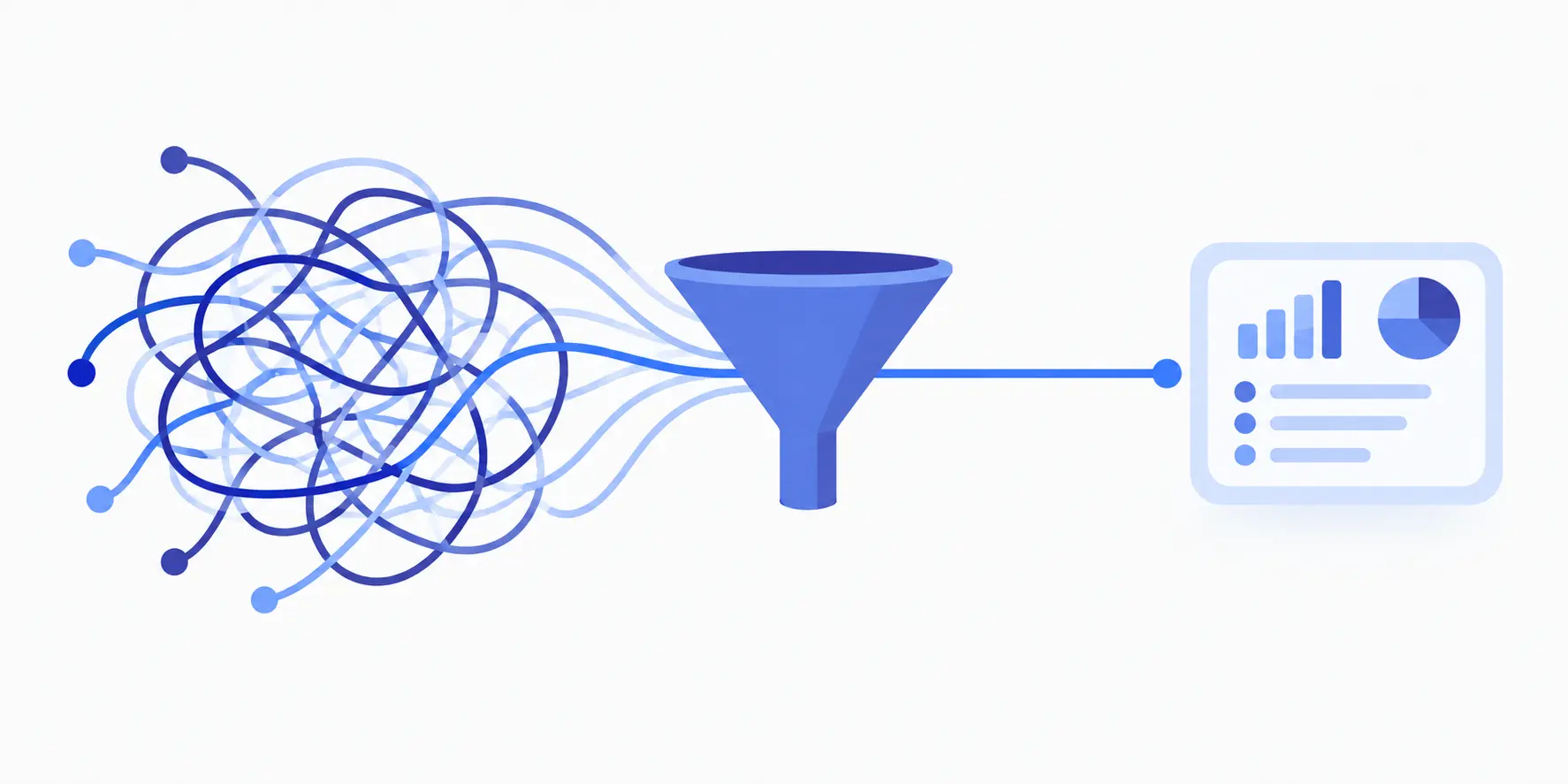
| 3 | Reduce the number of channels information has to travel through. Since the core problem is channel count growing faster than headcount, the fix isn’t more meetings; it’s fewer places decisions can hide. A shared workspace where tasks, files, and status are visible to the whole team collapses dozens of potential one-to-one channels into a single shared view everyone can check. |
| 4 | Build in a regular pattern-review, not just status updates. Moving from reactive firefighting to planning requires deliberately stepping back on a set cadence, weekly or monthly, to ask what keeps recurring, rather than only ever looking at this week’s fires. |
| 5 | Push decision-making down before the bottleneck forms. Identify which decisions genuinely need to stay centralized and which ones a team lead could own directly. Waiting until a founder or senior lead is visibly overwhelmed means the bottleneck has already been costing the team time for months. |
| 6 | Keep project structure visible in one place as headcount grows. The single biggest lever against growth-driven chaos is making sure that as more people join, they’re all working inside the same visible structure, rather than each new hire quietly building their own private process because nothing better existed for them to plug into. |
Final Thoughts
Every team I’ve watched struggle through a growth phase wasn’t lacking good people or good intentions. The people were the same capable individuals who’d made the smaller team work well. What changed was the math underneath them: more people meant exponentially more coordination, and nothing about how the team operated had scaled to match it.
Build the structure before the chaos forces it
I’d rather spend a week formalizing ownership and centralizing visibility while a team is still at fifteen people than spend a quarter firefighting the same recurring chaos once it’s thirty. That’s the real answer to why project management becomes chaotic as teams grow, and the same answer points to the fix: not more meetings, but a structure built to hold the complexity growth creates, which is exactly what Techxaro One is built to support.
